What should you know first?
Montenegro is attracting growing foreign investment interest across property, tourism and company structures. Here is a practical overview of the main investment categories, due diligence requirements and tax considerations. This guide is written for founders, investors and families comparing Montenegro and Cyprus routes before they commit to documents, banking, property or relocation decisions.
In This Article
Quick Answer
Foreign investors in Montenegro can purchase property, establish companies and operate in the tourism and hospitality sector without general restrictions. Total transaction costs for property purchases typically run 5% to 7% of the purchase price.
Key Takeaways
- Property investment
- Tourism and hospitality
- Company structures
- Tax on investment income
- Due diligence requirements
Why Montenegro is attracting foreign investment
In brief: Montenegro has attracted growing international investment interest for a combination of reasons: competitive corporate and personal tax rates, a developing property market with prices below comparable Mediterranean destinations, an active EU accession process, and a lifestyle proposition — coastal, mountainous, around 300 days of sunshine — that appeals to both…
Montenegro has attracted growing international investment interest for a combination of reasons: competitive corporate and personal tax rates, a developing property market with prices below comparable Mediterranean destinations, an active EU accession process, and a lifestyle proposition — coastal, mountainous, around 300 days of sunshine — that appeals to both lifestyle investors and those seeking a practical European base.
Property investment: the dominant asset class
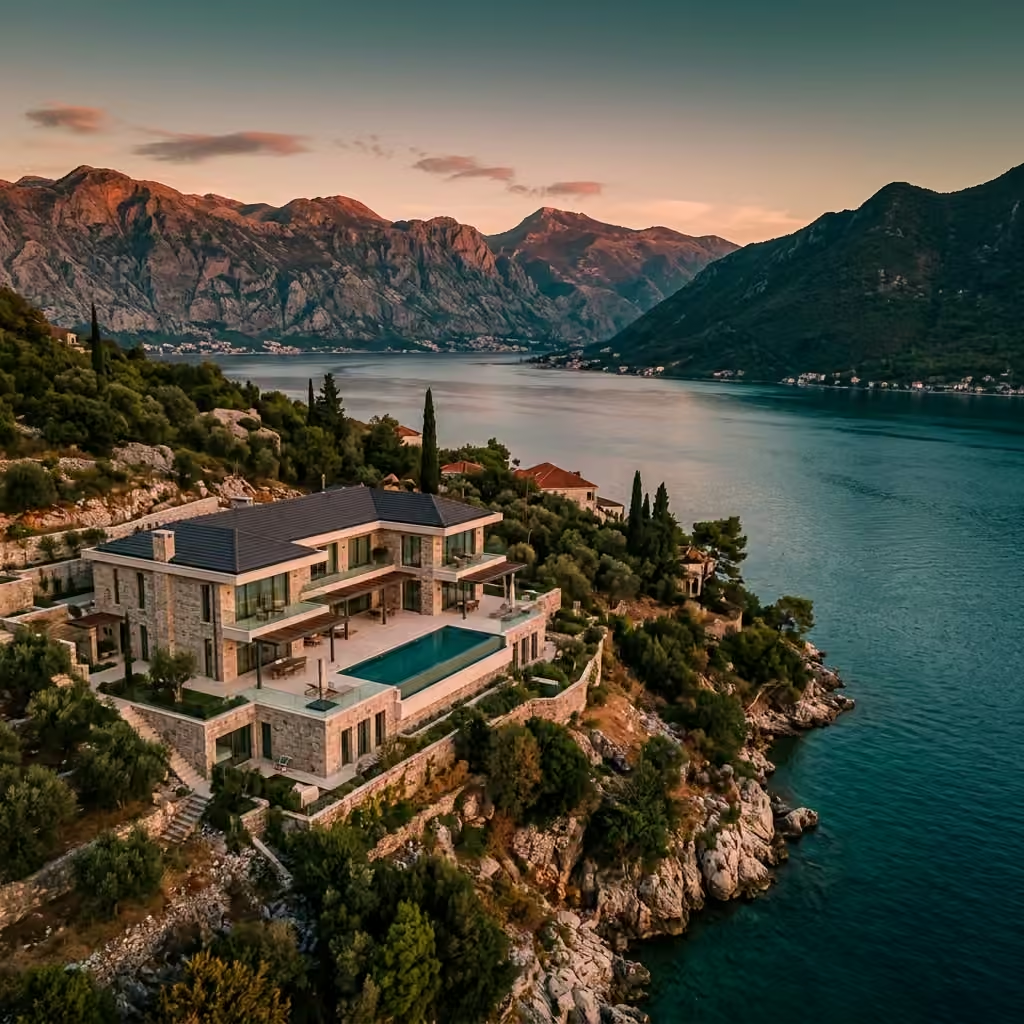
In brief: Residential and commercial real estate is the most accessible investment category for foreign investors. Coastal property — particularly in Budva, Tivat, Kotor and Porto Montenegro — has seen consistent price appreciation over the past decade. New development projects continue to attract international capital, with several large-scale resort and marina developments…
Residential and commercial real estate is the most accessible investment category for foreign investors. Coastal property — particularly in Budva, Tivat, Kotor and Porto Montenegro — has seen consistent price appreciation over the past decade. New development projects continue to attract international capital, with several large-scale resort and marina developments ongoing or recently completed.
Tourism and hospitality
In brief: Montenegro’s tourism sector is the largest component of its GDP and continues to grow. This creates investment opportunities in hospitality — from boutique hotels and guesthouses to serviced apartment operations and holiday rental portfolios. The short-let rental market in coastal areas generates strong summer yields, though cash flow planning must…
Montenegro’s tourism sector is the largest component of its GDP and continues to grow. This creates investment opportunities in hospitality — from boutique hotels and guesthouses to serviced apartment operations and holiday rental portfolios. The short-let rental market in coastal areas generates strong summer yields, though cash flow planning must account for lower off-season occupancy.
Company-based investment structures
In brief: Foreign investors who wish to conduct business operations in Montenegro typically do so through a Montenegrin DOO. The company can hold property, conduct commercial activity, employ staff and enter contracts. The company structure also provides the basis for a residency application for the investor.
Foreign investors who wish to conduct business operations in Montenegro typically do so through a Montenegrin DOO. The company can hold property, conduct commercial activity, employ staff and enter contracts. The company structure also provides the basis for a residency application for the investor.
Due diligence requirements
In brief: All property investments require thorough legal due diligence — title review, planning status confirmation, encumbrance checks and construction permit verification. Engaging a qualified Montenegrin lawyer acting independently for the buyer is non-negotiable for any significant investment. The quality of due diligence directly determines the quality of the investment outcome.
All property investments require thorough legal due diligence — title review, planning status confirmation, encumbrance checks and construction permit verification. Engaging a qualified Montenegrin lawyer acting independently for the buyer is non-negotiable for any significant investment. The quality of due diligence directly determines the quality of the investment outcome.
Tax on investment income
In brief: Rental income from Montenegrin property held by an individual is subject to Montenegrin personal income tax. Rental income held through a DOO is subject to corporate tax at 9% or 15% depending on profit level. Foreign investors should review their position both in Montenegro and in their country of residence…
Rental income from Montenegrin property held by an individual is subject to Montenegrin personal income tax. Rental income held through a DOO is subject to corporate tax at 9% or 15% depending on profit level. Foreign investors should review their position both in Montenegro and in their country of residence — income or gains from Montenegrin sources may also be taxable or reportable in the investor’s home country.
Compliance note
All information reflects general planning guidance as of the publication date. Montenegrin residency, corporate, tax and banking regulations are subject to change as Montenegro progresses through EU accession. This article is not a substitute for qualified legal, tax and corporate advisory services from professionals licensed to practise in Montenegro.